How to Read as a Kinesthetic Learner
Learning is a complex, but important, process that everyone must principal to exist successful. Interestingly, not anybody learns the same way or at the aforementioned pace. It is important to identify a learning method that works for you as early as possible in your school career considering y'all'll need it throughout your life every bit new tasks and information come your mode.
Education experts have identified four carve up learning styles: visual, auditory, read and write, and kinesthetic (or concrete). These 4 styles are sometimes collectively known as VARK learning. Your own learning fashion may match i of these categories perfectly or information technology may exist a combination of 2 styles of more. When it comes to learning, at that place is no right or wrong, adept or bad. It is merely a affair of determining which learning style or which combination works all-time to assist you learn and then exploring the learning techniques which fit all-time with your way .
In this article, we volition exist exploring all the different learning styles mentioned in a higher place and also accept a await at personalized learning, which does not work likewise in traditional education system yous are most likely more acquainted with. Hopefully, yous volition exist able to identify which type of learning suits you best and move forward with the tips associated with that learning style and then you tin can succeed in your studies. Let us first begin first with visual learning!
What is visual learning

Visual learners understand and retain data better when the ideas, words, and concepts are associated with images . Approximately 65 per cent of the population learns visually and are lucky that information technology is the predominant teaching manner found in classrooms. They mostly retain virtually 75 per cent of what they run into, with analytic visual learners processing words earlier pictures, and global visual learners turning to graphics before words.
Characteristics of visual learners
Every bit a visual learner, yous may observe that you:
- Love pictures and diagrams
- Doodle as you take notes
- Prefer to see words written down
- Create strong visual images in your listen when yous read
- Attracted to spoken communication that is rich in imagery
- Demand to close your optics to visualize something
- May need some idea earlier processing speeches or lectures
- Excel at reading maps or charts
- Accept a skilful sense of direction because you can visualize maps and charts
- Like to read
- Is good at spelling
- Remembers faces better than names
- Is hands distracted past noise
- Wait for something to watch when you become bored
- Discover details
- Like color and way
- Savor visual fine art activities
- Have difficulty following verbal directions
Visual learning strategies

Visual learners mostly retain about 75 per cent of information presented to them visually and they learn best alone. Visual learners need visual cues in forepart of them in club to solidify ideas and concepts in your minds. Today's classrooms are often ideal for visual learning, considering there are numerous visual aids: whiteboards, handouts, online learning videos , etc.
By employing strategies tailored to your visual learning style, you'll learn more finer. Here are some study tips for visual learners that should serve your needs:
- Continue your eyes on the lecturer; it will help you focus. In add-on, the lecturer's facial expressions and torso language will provide you lot with more than information.
- Sit down away from windows and near the front end of the room to minimize distractions.
- Ask the lecturer to repeat information or explicate if you don't understand.
- Try to visualize the lecture material as you hear it.
- When studying, cull a repose place. If you need to be at the library, wear earplugs or earmuffs.
- Take lots of notes and record many details every bit you study. And then, cover the notes and try to rewrite them to meet what yous remember.
- Use highlighters. Circumvolve central words or underline them.
- Create flashcards for yourself and review them oftentimes. They can exist specially effective in combination with graphs or charts, forcing yous to name parts of the diagram or explain the function.
- Describe diagrams, charts, pictures or timelines for yourself or ask the teacher to create them for yous.
- Seek out charts, maps, posters and software that volition help you lot learn material visually.
- Supersede words with symbols or initials. Associating a symbol with a concept may brand information technology easier to remember.
- Colour code your notes. If you lot consistently highlight sure types of information with markers of certain colours, it will assistance you to visually organize the information in your heed.
- Lookout videos that relate to the subject you're studying. In our current 24-hour interval and historic period, there is an explosion of educational videos available online.
For visual learners to larn a task, rather than abstract or factual information, they adopt to encounter a demonstration . They do non like to simply jump in or follow written instructions. They learn past watching. For instance, to learn how to dance a waltz, information technology would be helpful for them to run across some other couple execute the dance steps before taking on the challenge themselves. If you are a visual learner, try out the above tips to notice that they will profoundly amend your studying habits.
What is kinesthetic learning
Kinesthetic learners learn best when their bodies are active; action helps them cement information in their memories. It can be challenging for kinesthetic learners to succeed in the traditional classroom, according to writer Kelly Roell, because their bodies don't consider listening every bit an activity. It is hard for them to absorb the material being presented. They are generally successful at learning by doing, rather than by watching; musculus retention allows them to retrieve how to exercise something subsequently doing it simply in one case.
What is a kinesthetic learner
If you are a kinesthetic learner, it is likely you lot possess some of these traits:
- Fantabulous hand-centre co-ordination
- High free energy levels
- Quick reaction times
- Skilled at assembling things, such as models or furniture
- Good at performing experiments
- Excellent muscle retention; can duplicate something later on doing information technology once
- Talented at sports
- Becomes fidgety if required to sit for long periods; finds reasons to move
- Is not very attentive to auditory or visual presentations
- Movement helps concentration
- Gestures when speaking
- Tries things and likes to manipulate objects
- Enjoys action or adventure movies
Kinesthetic learning strategies

As a kinesthetic learner, you will likely find the traditional classroom setting to be challenging, since it requires sitting still for long periods of fourth dimension and doesn't cater to your kinesthetic learning mode. If you are fortunate, instructors volition accommodate your need for movement. Being aware of the atmospheric condition that assist you learn all-time volition allow you to work with your teachers to facilitate success.
For kinaesthetic learners, consider the post-obit approaches to ensure success in the classroom and in studying later on:
- Given a short attending span, it'southward important to take frequent breaks while studying. This doesn't equate to studying less than others; it simply means studying in shorter blocks of time and taking frequent, short, five-minute breaks.
- Examples, rather than plain facts, help kinesthetic learners retain material amend. Science and math formulas are easy to illustrate with real life examples and the more than relevant to daily life, the better. For other subjects, turn to example studies to get similar context.
- Bring together a study group. Kinesthetic learners savor discussions and they assist consolidate information.
- Satisfy the need to practice something with your easily while studying by squeezing a stress ball, tapping a pencil, or getting a fidget toy.
- For memorization, walk or footstep around a room while using your notes or flashcards or reciting to yourself.
- Aid memorization by writing words in the air or on a surface with your finger. Motion-picture show the words in your listen as your write.
- Bounce a tennis ball against a wall as y'all reply written report questions.
- Sitting at a desk may not exist the best posture for you while studying. Consider lying on your dorsum or your tummy or sitting in a bean bag chair.
- Underline or highlight equally you read assigned materials.
- Color can help focus your attending; endeavour reading through coloured transparencies or covering your desk with coloured structure paper. Experiment to meet if some colours work better for y'all than others.
- During classes, stand upwardly if you lot find your mind is wandering. You may wish to warning the teacher first that you'll exist doing and then.
- Tense and relax your muscles while sitting through a lecture. Keep your easily busy by wrapping and unwrapping a rubber band around your pen or pencil.
- Typing your notes on a computer can reinforce lessons through a sense of impact.
- Become for a walk or a run while listening to an audiotape of a lecture.
- Create flashcards for studying. Various areas of the encephalon become engaged through the act of writing out the information and flipping the cards over.
Educator Kirin Sinha is an advocate for kinesthetic learning. Kinesthetic learning connects the different means in which we learn, she notes, "and this process enables a more effective understanding and retention of data." she writes. "In kinesthetic learning, movement and activity supersede more passive forms of learning.
"No matter how much we memorize, recite, and report, our muscle memory seems to trump our brains alone. We learn best when we combine heed and body."
Therefore, if kinesthetic learning is your natural learning mode, you should have the advantage of beingness able to retain data for a long time once you lot larn it. Use this ability to your benefit.
What is read and write learning
Read-write learners prefer information that is displayed as words. The read-write learning mode is ane that many teachers adopt. Practiced reading and writing skills are sought later on by employers, too. Read-write learners adopt all types of text-based input and output , including essays, books, the Cyberspace and PowerPoint presentations – anything that focuses on words and more than words.
Read-write learners succeed in traditional classrooms where the emphasis is on reading textbooks, taking notes and writing essay tests. They can be more independent than many other learners, because all they need is access to the necessary written data and they're off and running.
Read write learners characteristics

If yous are a read-write learner, y'all will have a particular read write learning style. Hither are some of the traits you may possess:
- Prefers reading data to hearing or seeing it presented
- Enjoys reading
- Comprehends and remembers what is read
- Prefers reading themselves rather than hearing stories read aloud
- May enjoy writing
- May accept all-encompassing notes in class
- Won't shy away from resources such equally dictionaries and thesauruses
- Prefers to written report alone to avoid distractions
- Works best in tranquility places
- Learns all-time from teachers whose lectures are packed with information
- Able to translate abstract concepts into words and essays
Written report tips for read write learners

Success in life depends, to a large extent, on acquiring the information you need to earn a living – along with the skills or interests that bring you joy. As a member of the read and write learners grouping, you lot will want to capitalize on your strengths equally you larn the information you lot need to progress towards your goals.
Consider a mixture of the following techniques as you lot pursue your studies:
- Take copious notes in class — in your own words.
- Rewrite your notes to cement the data in your heed, only practice so past re-reading, interpreting and writing it in your own words.
- Paraphrase the main ideas and principles to provide yourself with a deeper understanding. If you tin't explicate a concept in your own words, it's a sign that you lot don't fully empathise information technology.
- Write out the instructions for each step of a procedure or math problem.
- Create mail service-it notes or notation cards with cardinal information and place them in visible places, such as the mirror or in forepart of the sink.
- Hang onto handouts from class and contain them into your studying. The more written data you have that's pertinent to the subject, the better.
- Write notes to yourself in the margins of handouts or on the printed copies of PowerPoint presentations.
- Create bullet-point lists from your notes. Condensing information into small, easy-to-digest $.25 puts it into an easy-to-read/review format.
- Plow these lists into multiple option questions to exam yourself.
- Make text-based flashcards to test your noesis on important data you will demand to know.
- Add words to all charts and diagrams . Turning the pictures into words will help you process the data better considering you have added your own written explanation and volition be more likely to remember it. During an exam, you will as well be more likely to visualize important words rather than shapes or pictures.
- Be sure you understand all key terms. Utilise the glossary in your textbook, or even better, create your ain. Defining terms in your own words volition also assist in retention.
- Exam your knowledge of key words and phrases by playing hangman with a classmate.
- Compare your notes to those of a classmate to ensure you haven't missed anything.
Once y'all accept mastered these strategies, be aware that your learning fashion may change over time. You may non observe the read/write learning way to suit yous as you progress on in life. Information technology is also possible that your personal learning style is a mix of the major styles , so review the traits and strategies of the other styles to see if anything fits and adapt your approach appropriately.
What is auditory learning
Auditory learners acquire best by actively learning : hearing data spoken or sung aloud and having the opportunity to ask questions. Approximately 30 per cent of schoolhouse-age learners fit this style.
Auditory learners aren't focused on taking notes in form. They absorb information by listening intently , but also want to talk over or question the information that has been imparted so they can be labeled as disruptive or disinterested. However, talking about what they take heard is simply a function of their learning style.
Auditory learners characteristics

If you are an auditory learner, hither are some of the traits you may possess:
- Remembers what yous say and hear
- May read slowly
- Follows spoken directions well
- Likes explaining and is practiced at doing and so
- Enjoys oral reports, discussions and debates
- Can't keep placidity for long periods of time
- Enjoys performing onstage
- Remembers names
- Enjoys music and may sing, hum or whistle to yourself
- Works well as a report group member
- Easily distracted by both noise and silence
- May find it difficult to interpret complex graphs or diagrams
- Expresses interest and enthusiasm verbally
Auditory learning strategies

If yous identify yourself equally an auditory learner , it's important to play to your strengths so that y'all can blot the data that comes your way. You want to employ report methods that permit you to hear information and repeat it aloud to adapt for your auditory learning style. Endeavor the following study tips for auditory learners as you nourish classes or work on your homework:
- Gear up goals for your assignments and verbalize them orally .
- Enquire questions in grade , considering it will require the instructor to put an idea into words or paraphrase the information and you volition hear it. Participate in classroom discussions.
- Tape your lectures so yous can replay them as needed, commenting when appropriate. Ensure that the instructor knows what you are doing and why then you lot are non defendant of existence disruptive.
- Recite information that yous want to remember, repeating it several times aloud.
- Read out loud whenever possible, because hearing the material volition assistance y'all to understand it.
- Create flashcards for material you want to acquire and read them aloud repeatedly. Colour lawmaking them to brand it even easier.
- Record the important points you want to larn for an exam and listen to the recording repeatedly.
- Employ mnemonic devices to think facts. Word clan is an splendid tool.
- Study with others and then you tin talk about the data, allowing yous to hear information technology again.
- When appropriate, ask your instructor/teacher if you can submit reports or papers equally oral presentations or recordings.
Of course, it'due south also important to nurture your abilities with other learning styles, which can exist done through elementary games. For example, boost your visual learning skills by reviewing shapes and colours; have someone prepare a tray of objects and ask someone to remove them, ane at a time. It is your task to identify the missing objects. Amend concrete skills by building something with LEGO or a kit.
However, you tin also devise strategies for adding an audio component to lessons that focus on the visual and physical. For example, if you are required to learn trip the light fantastic toe steps, whisper each pace to yourself as you move through the dance. If you can't concentrate on a lecture that has slides accompanying it, keep your optics on your notebook so you aren't distracted.
What is personalized learning?
The personalized learning definition in technical terms describe information technology equally the self-regulated tailoring of instruction, curricula, and learning environments by learners to meet their own needs. Y'all can also say that information technology is a form of autodidacticism with more idea and intendance put into information technology.
Of class, the planning must be adequate but not excessive so that the learning actually goes underway and is not halted by likewise much planning and thinking of what to practice and where to go. The personalized learning plan that is ultimately put into action needs a balance of planning and flexibility.
Most of the time, technology helps in facilitating this process, every bit well as the learning environments over the course of the process.
However, people can as easily do this with simply pen and paper or even without. All of these parameters depend on your own needs, tendencies, and learning behaviors. This constitutes near of the planning process for personalized learning, so it is all nearly knowing what makes y'all tick and understand concepts near easily.
To put the process simply, yous selection the subjects yous need to learn and/or are interested in and go all the way with learning and becoming skillful at them.
It is all-time that you take subjects that are mostly related to each other so that yous tin can combine them for your purposes, similar writing and video editing so that you can make your own movies.
Learning Models
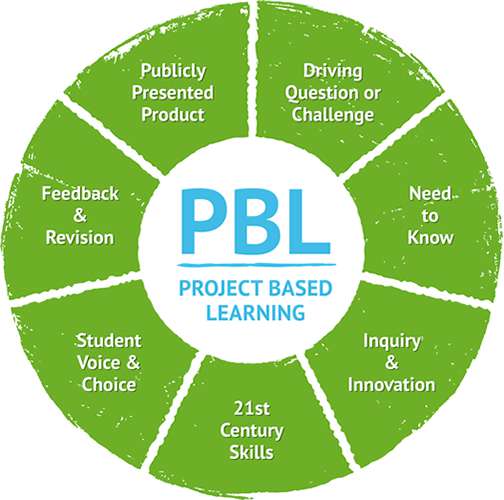
There are various personalized learning models that accept come up over the years to help optimize the process. Many learning establishments have come up with their own, and it is worth taking a look at some of them. It seems these institutions seem to be focused more on children as they are the easiest to teach and mold.
EPiC Elementary School in Freedom, Missouri is a personalized project-based learning community that takes a lot from its name, with big ideas and an aim to always introduce. Its goal is to turn all learners into expert learners by empowering creativity with existent tools.
They take kids from zip to being builders and leaders, all the way to beingness designers and changemakers through their unique tiered studio system.
KM Explore is a k-5 elementary school in Wales, Wisconsin that is more than nearly a generative curriculum grown from its community of learners, their families, and the educators. Its model focuses more than on creating optimal learning spaces to facilitate collaborative teaching and learning.
The Vittra International Schools are xxx schools in Sweden that has thrown abroad the old-school classroom in favor of learning environments that foster children's curiosity and inventiveness. There is much already said about the Swedish educational system, but Vittra takes it further by going for a more unorthodox and progressive arroyo.
There are many more establishments like these popping up all over the world, each with the motivation to create personalized learning environments that are all about fostering the love of learning instead of simply getting loftier grades in everything without caring if students learned anything or not.
Strategies and Tools
In order to brand the nigh of your learning feel, you should brand use of certain strategies and tools to make things easier and more comprehensible. Information technology is easy to get lost in the thick of the process, so having an overall strategy to continue y'all on the right track and tools to brand it less cluttered and more conducive is very of import for a learner.
A selection board is a uncomplicated tool that lets you track and plan your learning progress, make sense of ideas and concepts, and then on. Information technology is a versatile tool wherein you take the idea behind an assignment or learning standard and create four choices that, if completed, volition help you accost it.
The all-time thing about information technology is you tin can use information technology as you go, then you do not take to waste product too much fourth dimension having to fiddle with it.
Project-based learning is a very skillful way to both learn and apply methods and techniques at the aforementioned fourth dimension. Having an objective in the form of a finished product makes learning more engaging and helps the learner understand what each thing is for as it is applied to the projection.
It too requires the learner to engage and communicate with others in order to complete the projection, as well equally do time and homo management in means that would be almost effective and efficient.
Tiered learning targets lets you have reachable objectives at every level of learning y'all are in at the moment. Having goals that are too big tin make learning less conducive and more confusing, while having goals that are either likewise few or too easy is a sure way to non acquire as much as yous could potentially have.
By breaking down your goals into chunks and arranging them by level of difficulty from the easiest to the most difficult, yous tin climb up that ladder and complete it.
Writing things down on paper is the ultimate method of both expression, assessment, and confirmation. Throughout your learning process, you should take notes, record your observations and insights through a periodical, share your experiences with a blog, appraise your progress with some quick write-ups, and then on.
The act of writing is a manner for the encephalon to reconfirm caused knowledge and apply new knowledge into your own ideas.
As for supplementary tools, there are none more than effective and versatile at the moment than your mobile device . Whether you lot accept a tablet or a smartphone, you can take photos and notes with information technology, install apps to reach dissimilar tasks related to your learning experience, read more material through ebooks, track your progress with something like a to-do app, and then on.
You might want to check it out; the best learning tool you can have may be in your pocket right now.
Assessments
There are two means to assess your learning progress— formative and summative . Each has their strengths and weaknesses, both of which you lot should be aware of if yous want to take your learning seriously.
The purpose of formative cess is to inform and redirect knowledge and exercise, provide firsthand feedback for both mentor and learner, and provide useful data at a frequent and continuous interval. On the other hand, summative cess is basically like a terminal test that sums up everything you have learned throughout the whole process
The drawback to formative assessment is that information technology is time-consuming and requires a lot of attention in part of the mentor to brand sure that the learner is on the right runway. While it may seem easier to simply utilise summative assessment in that regard, the trouble with using it alone is that it assumes that the learning experience for all the students is a one-size-fits-all kind of thing, which is more often than not untrue since everyone learns and functions differently.
The utilize of both in conjunction to facilitate the learning experience seems to exist the all-time fashion to make sure that students pick upwards the curriculum well and really get a expert deal of knowledge and applied skill out of it.
As you can come across, there are quite a few very unlike ways that different people may find helps them to larn best. It could even be that y'all recognize characteristics from several learning styles that we have covered. What is virtually important is to recognize what volition help you succeed and build strategies to foster your type of learning. At StudyPug, you can find helpful notes and resources, as well every bit video lessons that can cater to different methods of learning. We welcome you to give us a try for costless !
We hope this article helped you identify your learning style and nosotros wish you all the best in the rest of your educational career!
How to Read as a Kinesthetic Learner
Source: https://www.studypug.com/blog/kinesthetic-learning-style/
0 Response to "How to Read as a Kinesthetic Learner"
Post a Comment